Swedish Trade Association Demands Overhaul of Gambling Enforcement
Swedish Trade Association Demands Overhaul of Gambling Enforcement – Regulator Urged to Adopt Broader Compliance Frameworks
Key Takeaways
- The Swedish Trade Association for Online Gambling seeks a shift in how the national regulator handles sanctions and compliance.
- Proportional sanction scaling is recommended based on models used by the Swedish Financial Supervisory Authority.
- Anti-money laundering supervision currently relies on small sample sizes rather than holistic business risk assessments.
- Online casino channelization remains low at 68%, while sports betting captures 95% of the market.
Regulator advised to mirror financial and educational oversight
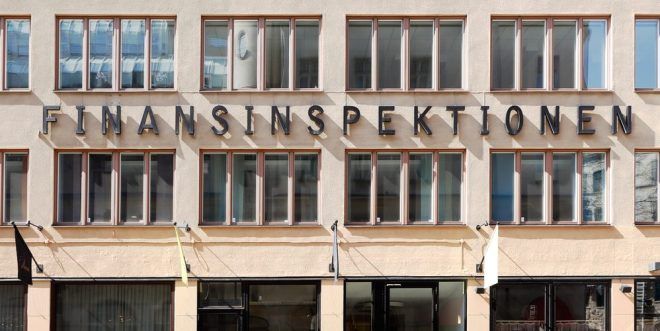
The Swedish Trade Association for Online Gambling (BOS) has formally requested that Sweden’s gambling regulator adjust its enforcement strategies. BOS suggests that the Swedish Gambling Inspectorate, known as Spelinspektionen, should evaluate the regulatory frameworks utilized by other national government agencies. These include the Swedish Financial Supervisory Authority (FI), the Schools Inspectorate, and the Stockholm County Administrative Board.
BOS Secretary General Gustaf Hoffstedt indicated that aligning working methods with these established bodies would foster better long-term compliance across the licensed gambling market. The trade body argues that looking outside the immediate gaming sector can provide valuable blueprints for effective industry supervision. This perspective forms the basis of a recent report comparing Spelinspektionen with the three other administrative entities.
The primary goal is to shift the regulatory focus toward a more sustainable compliance environment. Hoffstedt and BOS maintain that adopting these broader governmental practices would ultimately benefit the regulated Swedish market. Integrating these models could smooth regulatory friction without compromising the integrity of the market.
Disproportionate sanctions prompt calls for revised fee structures
A significant portion of the BOS report addresses the current sanctions policy implemented by the gambling regulator. Spelinspektionen maintains a highly active enforcement profile regarding non-compliance cases. This approach aligns the Swedish authority with other strict European regulators, such as the British Gambling Commission and the Dutch KSA, which closely monitor high-risk industries.
BOS contends that the current sanction scaling requires adjustment to ensure penalties remain proportional to the specific offense. The trade body highlights how the FI and the Stockholm County Administrative Board structure their financial penalties. The FI typically sets sanction fees below a threshold of 20-27% of their available range. The Stockholm County Administrative Board sets its penalties even lower, maintaining fees under 5% of the maximum allowance.
Implementing a similar structure within the gambling sector would adjust sanctions more proportionately to an operator’s turnover and the severity of the violation. The trade body stresses that while the gambling industry carries a high risk, enforcement actions should still reflect a scaled and measured approach. A more calibrated penalty system could prevent excessive financial strain on compliant companies facing minor infractions.
Anti-money laundering supervision requires a system oriented approach
The trade body is also advocating for a fundamental change in how the regulator conducts anti-money laundering (AML) supervision. BOS promotes a system oriented approach that evaluates a betting firm’s complete compliance framework rather than focusing strictly on individual errors. This methodology would prioritize overarching risk assessments, internal governance, and established operational procedures.
Current enforcement practices often isolate specific compliance failures, which BOS argues provides an incomplete picture of an operator’s overall risk management capabilities. The trade body noted that 11 out of 12 recent decisions by the Inspectorate based on Sweden’s 2021 AML Act relied on very limited data. These regulatory actions were determined using small samples of five to 15 customer files, without considering the comprehensive, business-wide risk assessments deployed by the operators.
Regulators often argue that systemic file errors should not occur under any circumstances, justifying the targeted enforcement. BOS counters that ignoring an operator’s broader risk models undermines the effectiveness of the compliance review. A shift toward a risk-based approach would strengthen the industry’s efforts against money laundering while enhancing other areas of regulatory supervision.
Low online casino channelization highlights regulatory friction
Disagreements regarding regulatory execution are common between BOS and the Inspectorate, particularly concerning market channelization. Sweden transitioned from a state gambling monopoly to a licensed framework in 2019, following a path similar to Denmark. Regional changes continue, with Finland scheduled to implement its own licensed system next year.
Since the 2019 regulatory shift, the Swedish market has struggled to maintain high channelization rates, especially within the online casino sector. The overall market channelization rate currently stands at 84%. Sports betting performs well with a 95% channelization rate, but the online casino segment lags significantly at just 68%.
A previous study conducted by Nordic Legal for BOS identified liabilities in the online casino regulation as a primary cause for these low rates. The study cited a narrow definition of permissible games, which places legally operating Swedish gaming firms at a commercial disadvantage compared to offshore and illegal markets. Despite these criticisms, BOS acknowledges positive aspects of the current oversight. The recent report praised the Inspectorate for demonstrating nuance regarding sanction severity in specific, localized cases.
Our Assessment
The ongoing dialogue between the Swedish Trade Association for Online Gambling and the national regulator highlights a structural debate over enforcement methodology. Shifting from localized file audits to broader systemic compliance reviews would fundamentally alter how operators manage their regulatory obligations. Aligning penalty scales with financial authorities could reduce disproportionate financial burdens on licensed operators. Resolving this enforcement friction is directly tied to improving the low channelization rates currently observed in the online casino segment, ensuring legal operators can compete effectively against unregulated alternatives.
need press exposure?
We deliver solutions to any topic in the iGaming niche.