Swedish Gambling Regulator Faces Criticism for Strict AML Enforcement
Swedish Gambling Regulator Faces Criticism for Strict AML Enforcement – Industry Report Highlights Discrepancies With Other State Authorities
Key Takeaways
- A report commissioned by the Swedish Trade Association for Online Gambling reveals Spelinspektionen applies maximum or near-maximum statutory fines in AML cases.
- The gambling regulator based 11 of 12 recent AML decisions on samples of just five to 15 customer files.
- Between 2022 and 2025, seven out of nine reviewed decisions included sanctions at or above 50% of the legal maximum.
- Other Swedish regulatory bodies favor a system-level, risk-based approach over small customer-case samples.
Spelinspektionen applies near-maximum statutory fines for AML breaches
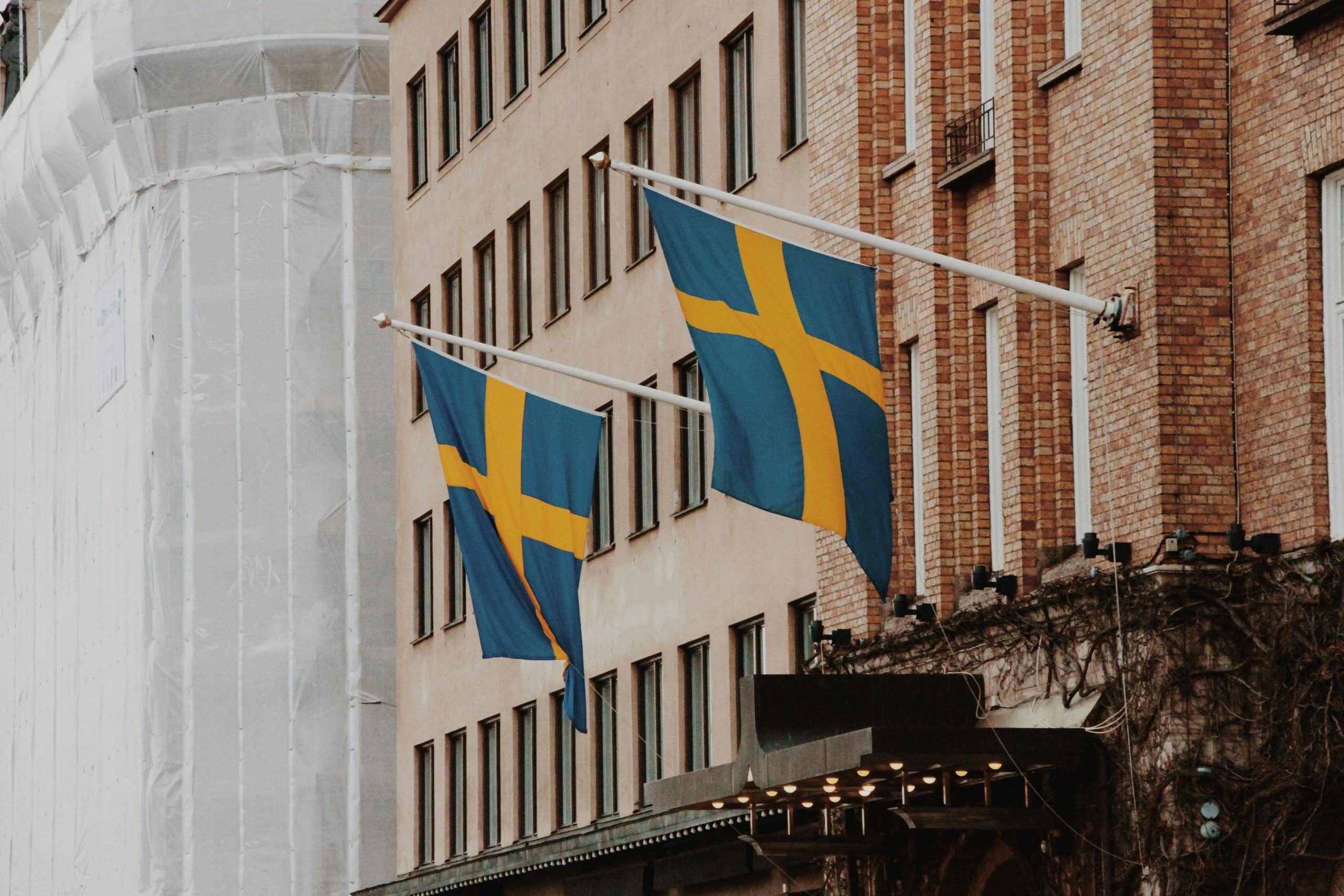
The Swedish Trade Association for Online Gambling (BOS) recently commissioned a report to evaluate local regulatory practices. Authored by the law firm Nordic Legal, the document examines how the Swedish Gambling Authority, known as Spelinspektionen, conducts its oversight. The analysis reveals that the gambling regulator adopts a significantly more severe stance on anti-money laundering (AML) compliance than other domestic government agencies.
Nordic Legal evaluated sanction fees relative to the legal maximum allowed for each respective authority. This approach accounts for variations in entity sizes and different fee structures across sectors. The findings show that Spelinspektionen consistently issues financial penalties that sit close to the statutory maximum limits.
Out of nine reviewed AML decisions issued between 2022 and 2025, seven included sanctions reaching at least 50% of the maximum allowed amount. Two of these cases resulted in fines hitting approximately 91% and 100% of the legal limit.
Financial and regional regulators prefer lower baseline penalties
The Nordic Legal report compared the gambling regulator against three other public bodies. These included the Financial Supervisory Authority (FI), the Stockholm County Administrative Board (Lst Stockholm), and the Swedish Schools Inspectorate. The comparative analysis focused specifically on AML oversight, the magnitude of sanction fees, and the suitability assessments of owners and senior managers.
Data from the Financial Supervisory Authority shows a stark contrast in the application of maximum fines. In large banking cases involving AML violations, the financial regulator typically issued sanctions ranging from 20% to 27% of its maximum capacity.
The Stockholm County Administrative Board followed a similar pattern of moderation. Fees issued by this regional authority usually represented a smaller fraction of the maximum limit. The board only applied higher penalties for cases involving serious compliance breaches.
Gambling authority relies on small customer file samples for AML supervision
Regulatory bodies in the financial sector generally employ a system-level, risk-based approach to anti-money laundering supervision. Both the Financial Supervisory Authority and the Stockholm County Administrative Board focus on reviewing comprehensive risk assessments, internal procedures, and overall controls. These agencies then select samples from customer files strictly to verify if the broader systems operate effectively in practice.
Spelinspektionen takes a fundamentally different path for its AML oversight. The gambling regulator largely depends on a customer-case driven, sample-based supervision model rather than evaluating system-wide compliance. Nordic Legal reviewed 12 AML-related decisions since 2021 to map this operational behavior.
The review found that 11 of those decisions were primarily based on examining small sample sizes of just five to 15 customer files. The gambling authority frequently excluded the operator’s overall risk assessment and internal policies from the scope of its review.
Industry association calls for alignment with standard regulatory procedures
BOS Secretary General Gustaf Hoffstedt requested the independent evaluation to highlight how the gambling authority deviates from standard Swedish public administration procedures. He argues that Spelinspektionen acts in a heavy-handed manner and places less focus on dialogue or collaborative problem-solving than its regulatory peers. The trade association maintains that the licensed Swedish gambling market would benefit if the agency aligned its working methods with those of other government authorities.
Recent enforcement actions align with the findings of the newly published report. Earlier this month, Spelinspektionen reaffirmed formal warnings against the Hillside Group and issued substantial financial penalties. The regulator imposed a SEK 40 million fine on the operator’s sports betting business and a separate SEK 4 million ($401,010) penalty on its gaming arm.
Following the publication of the document, Spelinspektionen was approached for a response. The Swedish Gambling Authority declined to provide a comment regarding the findings of the Nordic Legal report.
Our Assessment
The independent report commissioned by BOS provides quantifiable data indicating a divergence in regulatory enforcement strategies within Sweden. By comparing Spelinspektionen with authorities like the Financial Supervisory Authority, the data establishes that the gambling regulator favors sample-based evaluations over systemic risk assessments. This methodology leads to high-percentage fines based on isolated customer files rather than overarching compliance failures.
The frequency of maximum or near-maximum statutory fines suggests a strict operational mandate at the Swedish Gambling Authority. Operators entering or maintaining a presence in the Swedish market face a regulatory environment where small sampling can trigger maximum financial penalties. The recent multi-million kronor fines levied against the Hillside Group demonstrate that this rigid enforcement strategy remains actively in use.
need press exposure?
We deliver solutions to any topic in the iGaming niche.