Bally’s Secures $560M Financing Following Q3 Liquidity Breach
Bally’s Reports Q3 Liquidity Breach – Casino Operator Secures $560 Million to Fund Ongoing Expansion
Key Takeaways
- Bally’s posted a $117 million net loss in the third quarter despite growing revenue by 21.7% to $807.6 million.
- The casino operator breached a minimum liquidity covenant in September and received a conditional lender waiver on October 1.
- Management warns another covenant breach is probable by the end of December 2026.
- New financing commitments totaling $560 million will support liquidity and ongoing casino developments.
- Operating cash flow remains heavily negative with a $399.6 million outflow recorded over the first nine months.
Rising Revenue Fails to Prevent Deepening Quarterly Losses
Bally’s generated $807.6 million in revenue during the third quarter of 2026. This represents a 21.7% increase compared to the same period the previous year. Intralot operations and broader growth across North American markets drove these revenue improvements. Higher gross earnings failed to translate into overall profitability for the casino operator.
The company recorded a consolidated net loss of $117 million for the three-month period. This marks an expansion from the $106.2 million loss reported during the third quarter of 2025. Rising borrowing costs contributed significantly to the growing deficit. Net interest expense jumped to $126.3 million from $105.9 million a year earlier.
Liquidity Covenants Breach Forces Conditional Lender Waivers
Bally’s delayed the filing of its Form 10-Q for the third consecutive quarter. The eventual regulatory submission with the Securities and Exchange Commission revealed a failure to meet a minimum liquidity requirement at the end of September. The breach applied directly to the revolving credit facility of the company. Lenders issued a conditional waiver on October 1 to prevent an immediate debt default.
Management warns that a subsequent breach is highly probable before the close of the year. The operator expects to miss the minimum liquidity covenant again on December 31, 2026, unless it secures another waiver or amends the terms. Failure to obtain this relief could allow lenders to demand immediate repayment of the outstanding revolving credit balance. Bally’s maintained its formal warning regarding substantial doubt about its ability to continue as a going concern. The company is actively exploring additional financing avenues and potential asset sales to stabilize its balance sheet.
New Financing Injections Provide Near-Term Financial Relief
The company announced $560 million in new financing commitments just one day after disclosing the liquidity breach and going concern warning. The funding package includes $500 million in net proceeds derived from new second-lien term loans. These funds are designated for repaying certain outstanding debt and supporting general corporate operations. Gaming and Leisure Properties committed the remaining $60 million specifically for the Chicago casino development.
This new commitment pushes the total funding contribution from Gaming and Leisure Properties for the Chicago project to $1 billion. The financing agreements still require final documentation and regulatory approval before the funds become available. The October 1 lender agreement also granted Bally’s permission to raise up to $500 million in additional capital.
Cash flow pressure remains a central challenge across the organization. Bally’s ended September with $497.3 million in cash and equivalents. Cash reserves improved from $390.2 million in June but remain drastically below the $798.4 million held at the beginning of 2026. The company spent $133.7 million more on operating activities than it generated in the third quarter alone. Total operating cash outflow for the first nine months of the year reached $399.6 million.
Casino Development Projects Continue Despite Financial Pressures
CEO Robeson Reeves stated that major construction projects remain on track despite the documented financial hurdles. The permanent Chicago casino is slated to open in the spring of 2027. The company slowed down the construction of non-casino components at the Chicago site earlier this year to manage costs. Reeves indicated Bally’s will still meet or exceed its required $1.34 billion minimum investment agreement with the city.
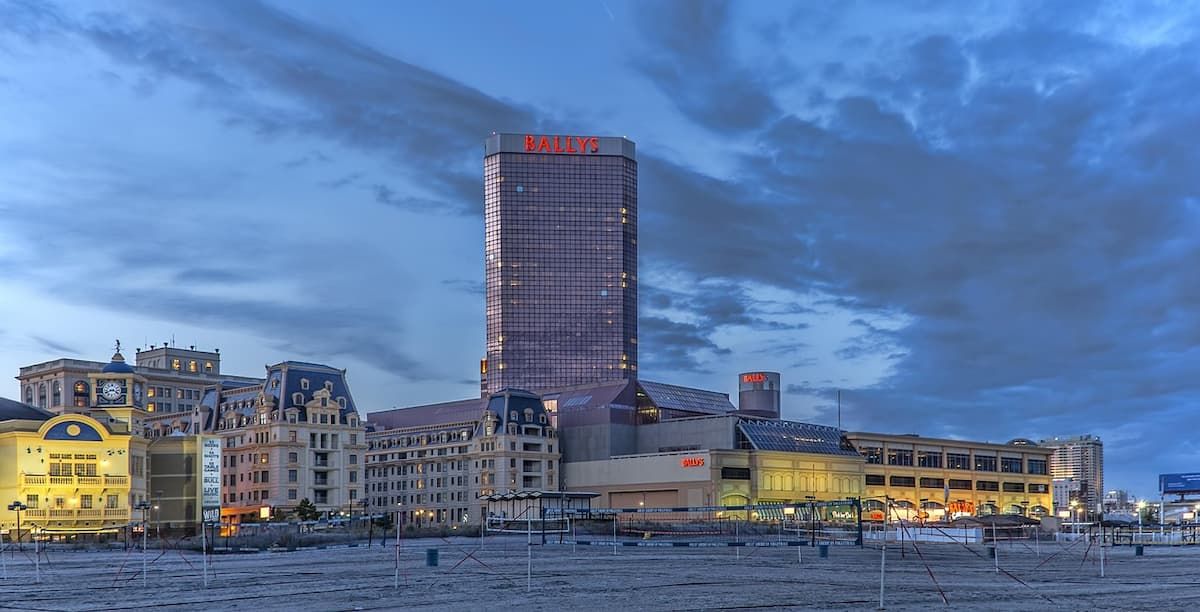
Lenders permitted the transfer of the New York gaming license to facilitate a $4 billion Bronx casino project. Bally’s finalized a $400 million financing agreement led by WhiteHawk Capital Partners on October 1 to cover pre-construction costs for this massive development. An additional $160 million remains available for future draws under this specific arrangement. The operator is also conducting advanced negotiations with potential partners for retail components at its Las Vegas property located near the new ballpark.
International operations showed signs of stabilization heading into the final quarter. The proposed acquisition of Evoke by the Bally’s Intralot division is progressing toward an expected closing in the first quarter of 2027. Australia-based partner The Star Entertainment Group returned to positive EBITDA in September. The Star expects fiscal year 2027 to deliver its first year of positive operating cash flow before one-off items in over two years.
Our Assessment
Bally’s faces a severe mismatch between its expanding multi-state development portfolio and its current cash generation capabilities. Securing $560 million in fresh financing commitments prevents an immediate liquidity crisis and funds short-term capital requirements for essential projects. The combination of persistent quarterly losses and substantial negative operating cash flows underscores the intense financial strain of running parallel multi-billion-dollar construction efforts. Relying on conditional lender waivers to clear debt covenants highlights the critical need for the operator to convert top-line revenue growth into sustainable free cash flow over the coming year.
need press exposure?
We deliver solutions to any topic in the iGaming niche.