Brazil Plans New Betting Restrictions and Tax Changes
Brazil Prepares New Betting Restrictions and Tax Measures – Regulatory Uncertainty Deepens for Licensed Operators
Key Takeaways
- Brazil’s government has finalised a new decree introducing additional restrictions on betting operators, pending technical review by the Ministry of Finance.
- Proposed measures include a five-second interval between bets, a ban on autoplay, and restrictions on sound effects that encourage betting.
- The government plans to include fixed-odds sports betting under a new Selective Tax as part of its Tax Reform programme expected in 2027.
- At the same time, Brazil’s Supreme Court is reviewing the constitutionality of the 1946 land-based casino ban.
- Congress is considering bills that could ban online casinos, prohibit advertising and sponsorships, or repeal the regulated market framework.
Government Finalises New Decree to Tighten Betting Rules
Brazil’s federal government is preparing a new round of restrictions targeting the country’s regulated betting market. According to reports cited by SBC Noticias Brasil, a decree has already been finalised and is awaiting technical evaluation by the Ministry of Finance. The Ministry oversees online betting through its Secretariat of Prizes and Bets, known as the SPA.
The restrictions are expected to be published next week, although specific details have not yet been formally disclosed. Measures backed by the SPA reportedly include a mandatory five-second interval between each bet, a prohibition of autoplay betting features, and a ban on sound effects designed to stimulate betting activity.
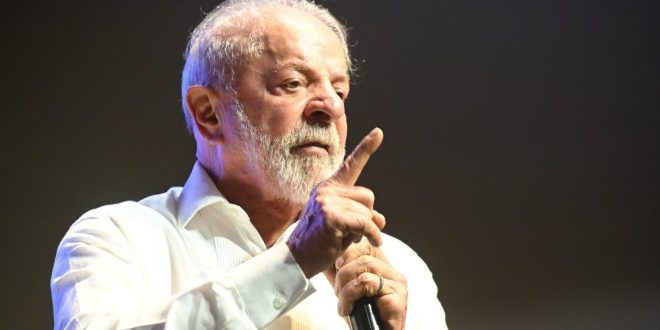
The decree has been discussed between the office of President Luiz Inacio Lula da Silva and multiple government bodies. These include the SPA, the National Secretariat for Digital Rights, the Consumer Protection Secretariat, the Ministry of Justice and Public Security, and the Secretariat for Social Communication. The involvement of several institutions indicates a coordinated regulatory effort across financial, digital, consumer protection, and public security domains.
Restrictions Follow Advertising Limits Introduced in July
The new decree follows legal ordinances that came into effect in July limiting advertising and marketing activities in the betting sector. These earlier measures were part of a broader push by President Lula to tighten oversight of gambling operations.
Although Lula approved the Bets Law in late 2024, which formally created a regulated online betting market from 1 January 2025, he has repeatedly criticised online gambling licences. He has described them as harmful to Brazilian families and has argued that vulnerable groups, including those receiving welfare assistance, should be excluded from participation.
The regulated market was launched while several core regulatory provisions were still under development. Compliance rules, safer gambling requirements, consumer protection measures, and advertising standards were not fully finalised at the time of launch. During 2025, the regulatory structure continued to evolve, including the prohibition of sign-up offers and incentives.
In addition, the Senate agreed to increase the gross gaming revenue tax rate from 12 percent to 18 percent by 2028. This change adds to the financial obligations for licensed operators already active in the market.
Selective Tax Proposal Targets Betting Under Wider Tax Reform
Beyond operational restrictions, the federal government is also seeking to subject fixed-odds sports betting companies to a new tax category. Under Brazil’s broader Tax Reform programme, expected to take effect in 2027, betting would fall under a so-called Selective Tax.
This tax is designed for sectors associated with potential social harm. Under the proposal, betting would be categorised similarly to cigarettes, reflecting concerns about addiction risks. If adopted, this measure would add another layer of taxation on top of existing gross gaming revenue obligations.
For operators and users, this signals that the cost base and regulatory environment for licensed betting platforms may continue to change in the coming years.
Congress Debates Bills to Ban Online Casinos and Advertising
Legislative developments in Congress add further uncertainty. Bill PL 2,258/2026, introduced on 7 May, aims to ban online casinos. Other proposals under discussion include a full repeal of the regulated betting market and a prohibition on advertising and sponsorships.
These initiatives come as Brazil’s political blocs prepare for general elections scheduled for October. The future of the Bets Law and the overall market framework is expected to be shaped by negotiations within Congress and the Senate.
For licensed operators, this means that the legal basis established in 2024 remains subject to potential revision. For users, especially those relying on federally authorised platforms, the scope of available products such as online casino games could change depending on legislative outcomes.
Supreme Court Reviews 1946 Land-Based Casino Ban
While the executive branch and Congress are considering tighter controls, Brazil’s Supreme Federal Court is reviewing a separate but related issue. The Court is examining whether Decree-Law No. 9,215 of 1946, which banned gambling with a particular focus on land-based casinos, is compatible with modern constitutional principles.
The 1946 decree established criminal sanctions against gambling operations. The current debate before the Court focuses on whether the ban conflicts with principles of free enterprise, economic order, and fundamental freedoms.
During a session on 5 August, different legal perspectives were presented. A representative from the Public Prosecutor’s Office of Rio Grande do Sul argued that the criminalisation of gambling reflects a moral decision aimed at protecting citizens. A public defender from the Federal Public Defender’s Office raised concerns about gambling’s impact on vulnerable groups and questioned whether repealing the decree could intensify those effects.
In contrast, a representative of the National Association of Mayors and Deputy Mayors argued that the ban contradicts constitutional principles such as freedom and free enterprise. She also noted that gambling is currently carried out legally through federally authorised companies under the Bets regime.
The Court’s review highlights a legal contradiction: a nationwide gambling ban dating from 1946 coexists with a 2024 law that legalised online betting. At the same time, legislative proposals seek to restrict or reverse parts of that newer framework.
Our Assessment
Brazil’s betting market is undergoing simultaneous regulatory tightening, tax reform initiatives, and constitutional review. The government is preparing new operational restrictions and additional taxation, while Congress debates measures that could significantly alter or reduce the current online offering. In parallel, the Supreme Court is reassessing the legal basis of the longstanding land-based casino ban. For licensed operators and users of regulated platforms, the framework established in 2024 remains in flux, with multiple institutional processes shaping the future scope and conditions of gambling in Brazil.
need press exposure?
We deliver solutions to any topic in the iGaming niche.