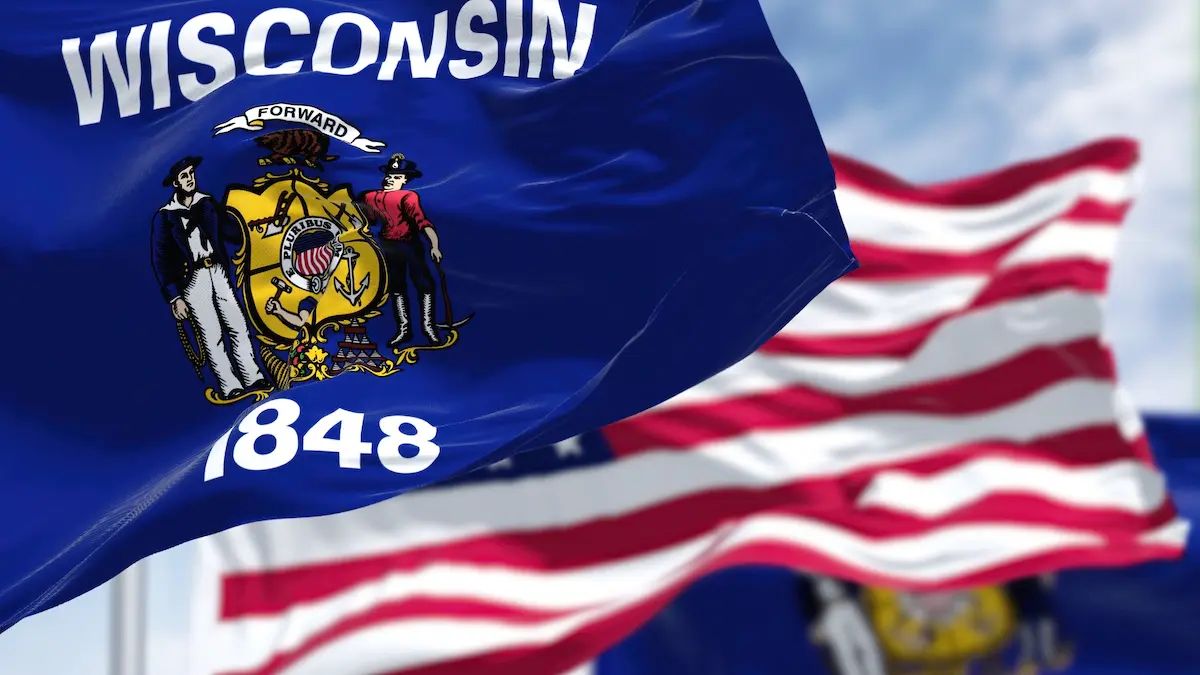
Coinbase Executive Says Wisconsin Lawsuit Could Reach Supreme Court
Coinbase Executive Says Wisconsin Prediction Market Lawsuit Could Reach US Supreme Court – Federal and State Authorities Clash Over Regulatory Authority
Key Takeaways
- Coinbase’s Vice President of Legal, Ryan VanGrack, said the legal dispute with Wisconsin could ultimately be decided by the US Supreme Court.
- Wisconsin Attorney General Josh Kaul has sued prediction market companies, including Coinbase, alleging they operate unregulated sports betting services.
- Coinbase argues that prediction markets are already regulated at the federal level by the Commodity Futures Trading Commission (CFTC).
- The CFTC has filed its own legal challenge, asserting exclusive federal authority over prediction markets.
Coinbase Signals Potential Supreme Court Battle Over Prediction Markets
The legal dispute between prediction market operators and the state of Wisconsin could escalate to the highest court in the United States. Ryan VanGrack, Vice President of Legal and Head of Litigation at Coinbase, stated in comments to WISN12 that the case may ultimately be resolved by the US Supreme Court.
VanGrack was responding to a lawsuit filed by Wisconsin Attorney General Josh Kaul against several prediction market companies, including Coinbase. The lawsuit accuses these platforms of offering unregulated sports betting services within the state.
According to VanGrack, the state’s legal action rests on what he described as a misunderstanding of how prediction markets are regulated. He said the issue is being framed incorrectly as a choice between state oversight and no oversight at all. In his view, the platforms in question are already subject to federal regulation.
Wisconsin Alleges Unregulated Sports Betting Activity
Attorney General Kaul’s lawsuit argues that certain prediction market platforms are effectively operating sports betting services without proper state authorization. Wisconsin, like other US states, has historically regulated gambling activities within its jurisdiction.
Kaul has emphasized that states have been responsible for regulating gambling for most of their history. He also rejected suggestions that the lawsuit was prompted by political pressure from tribal entities. Instead, he pointed to the rapid growth of online prediction markets as the trigger for both legal disputes and legislative debate within Wisconsin.
The Attorney General described the federal government’s legal argument as a “novel theory of the law.” He also questioned the relevance of the federal statute relied upon by the Commodity Futures Trading Commission, noting that it dates back to legislation enacted during the Great Depression of the 1930s.
For users of online betting and prediction platforms, this distinction between state gambling law and federal financial regulation is central. The classification of these markets determines which rules apply and which authority has enforcement power.
CFTC Asserts Exclusive Federal Authority
The dispute is not limited to the state and private companies. The Commodity Futures Trading Commission has launched its own legal challenge against Wisconsin, arguing that the federal government holds sole authority over prediction markets.
According to Coinbase’s legal position, prediction markets fall under the oversight of the CFTC, which regulates certain financial derivatives and related products at the federal level. VanGrack stated that the platforms involved are already regulated by a federal regulator, countering the claim that they operate without supervision.
The CFTC’s intervention adds another layer to the case. Rather than a simple enforcement action by a state authority, the dispute now centers on competing interpretations of regulatory jurisdiction. Wisconsin maintains that it has the authority to regulate what it views as gambling activity within its borders. The CFTC argues that federal law preempts such state-level enforcement when it comes to prediction markets.
This jurisdictional conflict increases the likelihood that higher courts may need to provide clarity. If lower courts issue conflicting rulings or if fundamental constitutional questions arise about federal versus state powers, the matter could progress through the appeals system.
Legal and Legislative Debate Intensifies in Wisconsin
The rise of online prediction markets has prompted both courtroom disputes and broader legislative discussion in Wisconsin. Attorney General Kaul indicated that the issue is now likely to be settled in the courts.
At the core of the debate is how prediction markets should be categorized. If they are treated as gambling products, they may fall under state gaming laws. If they are considered financial instruments regulated under federal commodities law, oversight would rest with the CFTC.
This distinction has practical implications for platform operators and users. State-level gambling regulations often involve licensing requirements and restrictions tied to specific jurisdictions. Federal financial regulation, by contrast, operates under a nationwide framework.
For international users and those evaluating crypto-based betting or prediction services, the outcome of this case could influence how such platforms are structured and regulated within the United States. While the current dispute focuses on Wisconsin, a Supreme Court decision would set a binding precedent across all states.
Our Assessment
The lawsuit filed by Wisconsin against prediction market companies, including Coinbase, has evolved into a broader legal confrontation over regulatory authority. Coinbase maintains that these markets are already subject to federal oversight by the CFTC, while Wisconsin argues that they constitute unregulated sports betting under state law. The CFTC’s separate legal action asserting exclusive federal jurisdiction raises the stakes and increases the possibility that the dispute could be resolved by the US Supreme Court. The case centers on the classification and regulation of prediction markets and may clarify the division of powers between state gambling regulators and federal financial authorities.
need press exposure?
We deliver solutions to any topic in the iGaming niche.