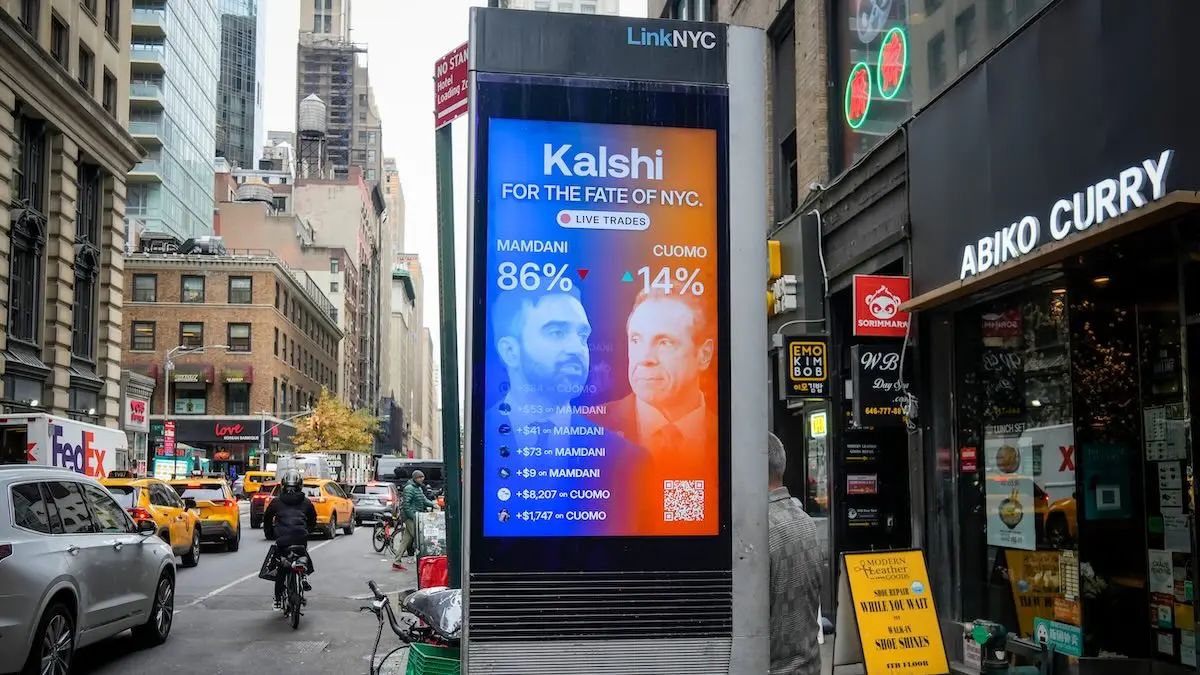
New York Sues Kalshi Over Alleged Illegal Gambling Operations
New York Sues Kalshi for Alleged Illegal Gambling Operation – State Seeks Fines, Restitution and Operational Ban
Key Takeaways
- New York Governor Kathy Hochul and Attorney General Letitia James have filed a lawsuit against Kalshi over alleged illegal gambling activities.
- The state claims Kalshi operated an unlicensed gambling business through its prediction market platform.
- The lawsuit seeks to stop Kalshi from operating in New York and demands fines, forfeiture of gains, and restitution to affected users.
- A federal court recently denied Kalshi’s request for a preliminary injunction against enforcement of New York gambling laws.
- Kalshi previously reached an agreement with Nevada regulators to implement geofencing for certain prohibited event contracts.
New York Alleges Kalshi Operated an Unlicensed Gambling Business
New York Governor Kathy Hochul and Attorney General Letitia James have initiated legal proceedings against prediction market platform Kalshi, alleging that the company operated an illegal gambling business in the state.
According to the Office of the Attorney General, an investigation found that Kalshi’s prediction market platform constitutes an unlicensed gambling operation under New York law. The lawsuit argues that the contracts offered on the platform meet the legal definition of gambling because outcomes are uncertain, outside the bettor’s control, or dependent on a game of chance.
State officials claim that Kalshi exposed New York residents, including individuals under the legal gambling age of 21, to serious personal and financial risk. Under New York law, participants in mobile sports betting must be at least 21 years old. The lawsuit alleges that Kalshi’s markets were accessible to users between 18 and 20 years of age.
The state is asking the court to issue an order prohibiting Kalshi from continuing to operate as an unlicensed gambling business in New York.
Fines, Forfeiture of Gains and Consumer Restitution Sought
In addition to seeking an operational ban, the Office of the Attorney General is requesting financial penalties. The lawsuit asks the court to require Kalshi to forfeit all gains deemed illegal and to pay fines equal to three times the amount of those gains.
The state also seeks restitution for consumers who were allegedly harmed. According to the filing, the objective is not only to halt ongoing operations but also to address financial impacts on users.
Governor Hochul stated that New York’s gaming laws are designed to protect consumers, prevent problematic gambling, and generate funding for public services. Attorney General James said that prediction markets such as Kalshi should be treated as gambling platforms when they involve wagering on uncertain outcomes.
The lawsuit forms part of what state officials describe as continued enforcement of New York’s gambling laws.
Prior Cease and Desist Order and Federal Court Ruling
The legal dispute follows earlier regulatory action. In October 2025, the New York State Gaming Commission issued a cease and desist order instructing Kalshi to stop offering sports related contracts in the state.
Instead of complying with the order, Kalshi filed a lawsuit in the US District Court against the Commission and its Commissioners. As a result of that legal challenge, the Commission refrained from undertaking enforcement action while the matter was before the court.
Earlier in July 2026, a federal judge for the Southern District of New York denied Kalshi’s motion for a preliminary injunction. The company had sought to prevent the Gaming Commission from enforcing state gambling laws against its event contracts. The denial removed the temporary protection Kalshi had sought against enforcement measures.
The new lawsuit filed by the Attorney General builds on that development and shifts the dispute into a broader enforcement action seeking penalties and restitution.
Age Restrictions and Licensing Requirements at the Center of the Case
A central issue in the case concerns licensing and age restrictions. The state alleges that Kalshi failed to obtain a license from the New York State Gaming Commission. Licensed casinos and mobile sports betting platforms in the state are subject to regulatory oversight and tax obligations.
According to the complaint, by operating without a license, Kalshi avoided the regulatory and tax framework that applies to approved gambling operators in New York.
The lawsuit also highlights the availability of Kalshi’s markets to users aged 18 to 20. In New York, the legal age for participating in mobile sports betting is 21. The state argues that this discrepancy exposes younger users to gambling related risks outside the established regulatory system.
For users evaluating prediction markets and event contracts, the case underscores how state authorities may interpret such products under existing gambling statutes.
Related Regulatory Actions in New York and Nevada
The action against Kalshi is part of a broader enforcement approach by New York authorities. In April, Attorney General James filed lawsuits against Coinbase and Gemini, alleging that they operated illegal gambling platforms. In addition, Governor Hochul signed an Executive Order prohibiting state employees from engaging in insider trading through prediction markets such as Kalshi.
Outside New York, Kalshi has also faced regulatory scrutiny. Last week, the company reached an agreement with the Nevada Gaming Control Board to implement geofencing technology. The measure is designed to prevent customers located in Nevada from trading certain prohibited event contracts, including those related to sports, elections and entertainment events.
This agreement indicates that regulators in multiple jurisdictions are examining how event based contracts fit within existing gambling and financial regulations.
Our Assessment
The lawsuit filed by New York authorities represents a formal escalation in the state’s efforts to classify and regulate prediction market platforms under gambling law. The case centers on licensing requirements, age restrictions, and the legal definition of gambling in relation to event contracts.
For users and platform operators, the proceedings highlight the regulatory risks associated with offering or accessing prediction market products in jurisdictions where authorities consider them equivalent to gambling. The outcome of the case may determine whether Kalshi can continue operating in New York and under what conditions such platforms must comply with state gaming laws.
need press exposure?
We deliver solutions to any topic in the iGaming niche.